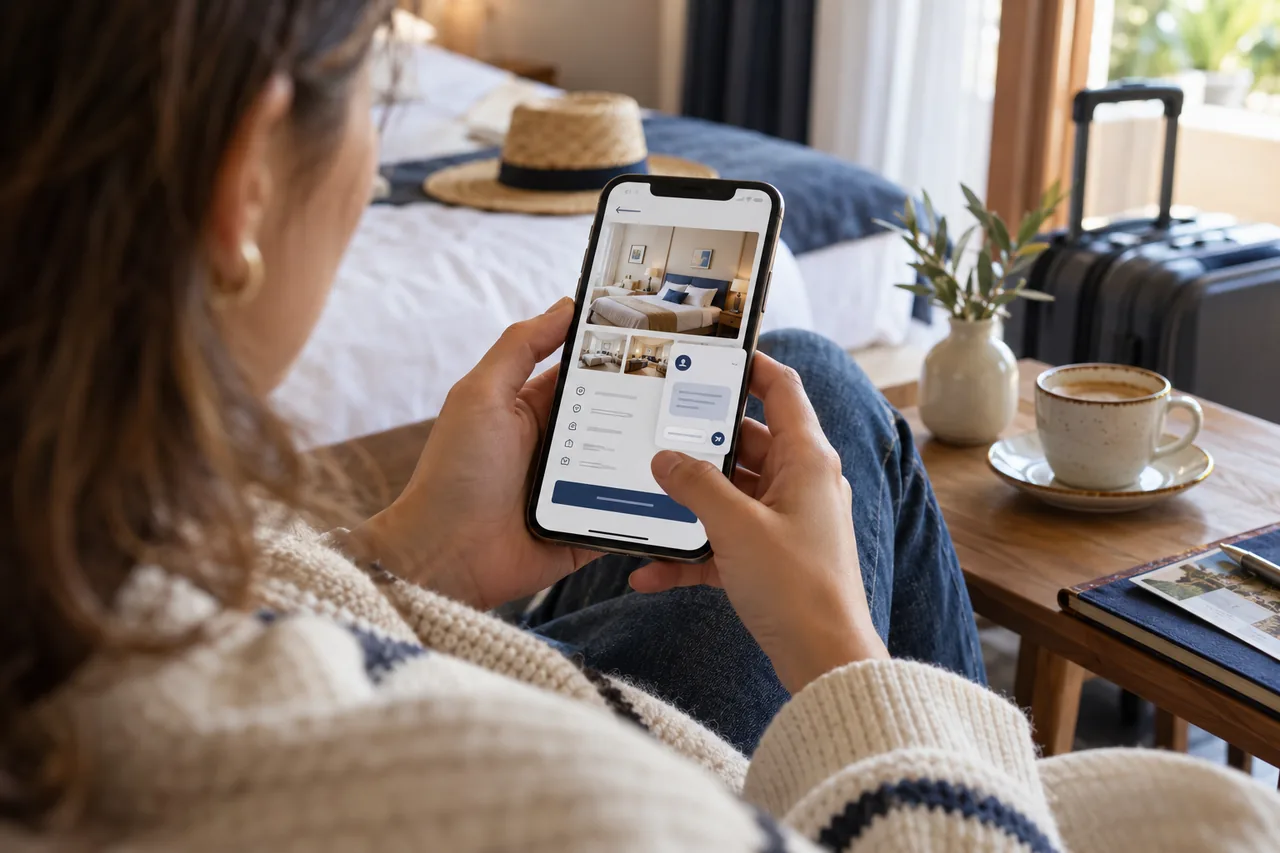
Everyone's talking about it: AI will change tourism. But for someone running a 25-room three-star hotel, the question is much more concrete: "What can I do with AI tomorrow morning to save time or earn more?"
The good news is you don't need big investments to start. The bad news is that, used badly, AI can create confusion, errors and identical-sounding copy. Let's look at where to start with AI at your hotel, practically and safely.
The principle: AI as an assistant, not a replacement
Think of AI as a very fast colleague who prepares drafts, summaries and analyses. You (or your staff) check, correct and decide. In a hotel, the guest relationship, prices and promises made remain your responsibility.
Tasks to start with (low risk, high benefit)
1. Writing and improving copy
- room and amenity descriptions, from your real data;
- social posts and newsletters;
- destination blog articles (to verify and personalise);
- short and long versions of the same text for your website, OTAs and Google.
See how to describe hotel rooms without the usual clichés.
2. Replying faster
- draft replies to emails and messages;
- draft quotes from your prices and rules;
- review replies, to personalise.
See how to use AI to prepare quotes to check before sending.
3. Translating
- replies to international guests;
- website copy and in-room materials (with review).
See how to prepare multilingual guest replies with the help of AI.
4. Analysing
- reviews (recurring themes, strengths, problems);
- booking and channel data (with due care for personal data);
- competitor prices you've collected.
See how to use AI to analyse reviews and spot recurring problems.
Tasks to tackle later (more complex)
- AI assistants on your website or WhatsApp that answer guests directly. See an AI assistant on your hotel website: when it helps and when it confuses;
- automations connected to your PMS and booking engine;
- custom tools for operations, pricing, CRM.
Safety rules
- don't enter sensitive guest data (documents, cards, health) into general-purpose AI tools;
- always check prices, availability, times and conditions before sending anything: AI can invent plausible but wrong information. See how to stop an AI assistant inventing hotel prices, services or conditions;
- personalise copy: generic content doesn't convince guests or help SEO;
- give AI correct information: an "official document" with all your hotel's information is the foundation of every use.
A 4-week plan
| Week | Activity |
|---|---|
| 1 | Create the document with all your hotel's official information |
| 2 | Use AI to rewrite room descriptions and FAQs |
| 3 | Prepare reply and quote templates with AI's help |
| 4 | Analyse your last 100 reviews and note recurring themes |
At month's end, assess time saved and quality of results.
Frequently asked questions
Which AI tool should I use?
To start, the most popular general assistants are fine. The choice matters less than how you use it: clear instructions, correct data, human checks.
Will AI replace reception?
No. It can lighten repetitive work, but hospitality, judgement and relationships stay human. In fact, well-used AI gives staff more time for guests.
Is it safe to use AI with guest data?
With caution. Avoid entering personal data into general tools and check the terms of use. More advanced uses need solutions designed with privacy in mind.
Want to know how to use AI at your hotel?
We build custom AI solutions starting from our own hotels in Rimini. With our free marketing audit we identify where AI can save your hotel the most time, safely.