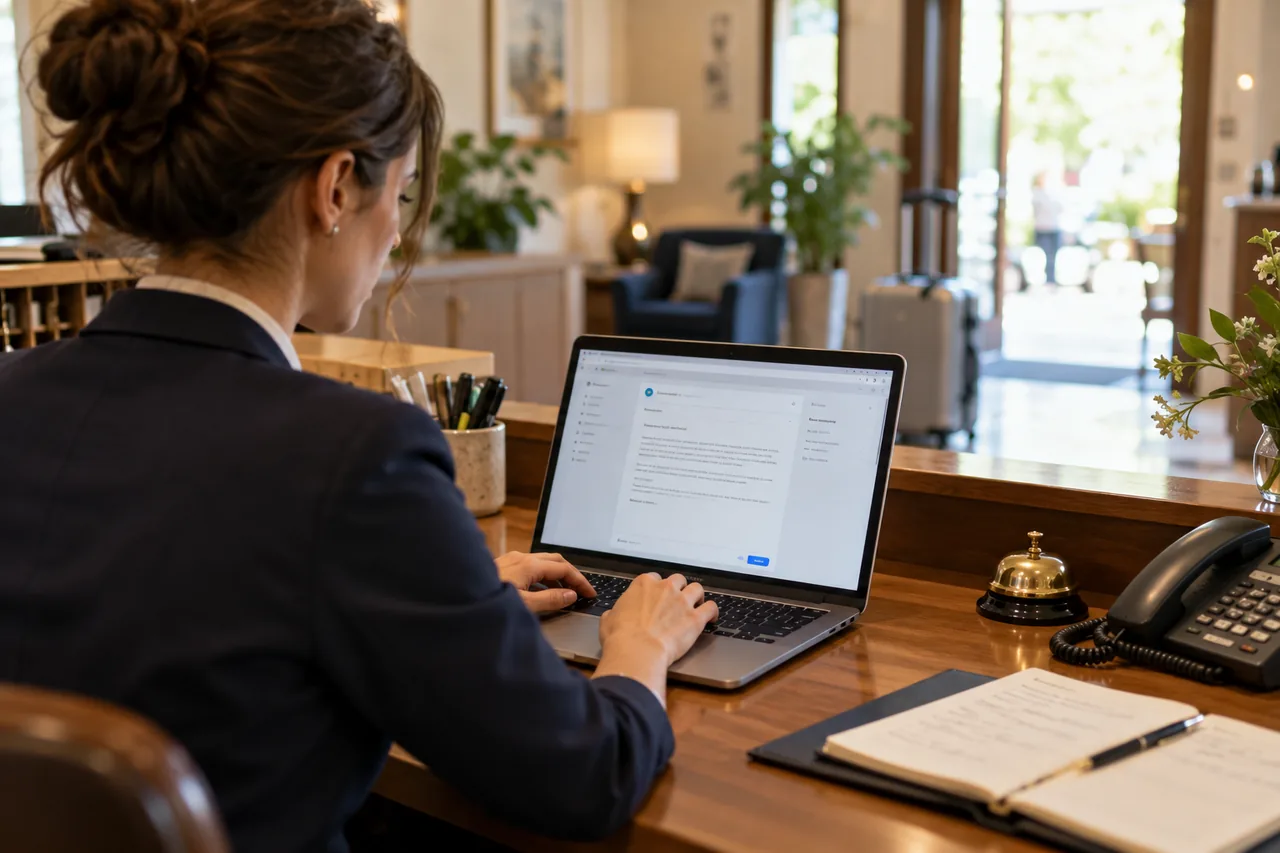
Reception is answering the phone during a check-in while three WhatsApp messages and two quote emails arrive. The owner sorts the housekeeping schedule late at night and prepares reports at the weekend. Staff are few, hard to find, and requests keep growing.
You don't need to turn the hotel into a machine without people. But many repetitive tasks can be automated, freeing time for what really matters: welcoming guests. Let's look at what's worth automating in a small hotel and what to leave to people.
The principle: automate the repetitive, not the relationship
A good rule:
- automate what's repetitive, predictable and the same for everyone;
- simplify what needs human control but can be prepared in advance;
- leave to people what requires empathy, judgement and exceptions.
Areas you can automate
1. Guest messages
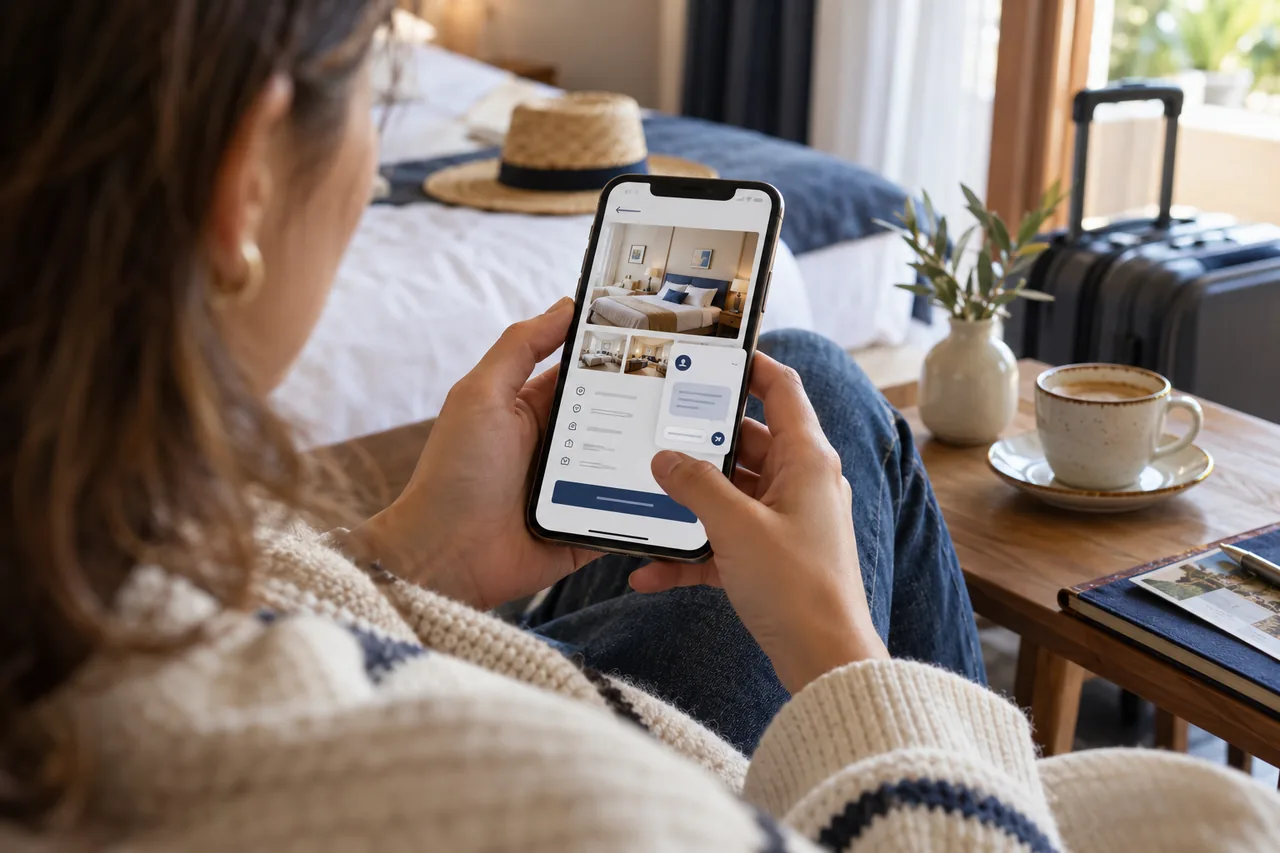
- booking confirmations and pre-arrival messages (practical info, times, directions);
- quick replies to frequent questions;
- a thank-you message and review request after departure.
See how to automate FAQ replies without losing the personal touch.
2. Check-in and guest data
- online or tablet check-in, collecting documents and signatures;
- privacy and marketing consent collected digitally;
- automatic submission of data where required by law (via your PMS).
At our hotels in Rimini we use iPad check-in: guests sign on arrival and, with consent, their data feeds our marketing database.
3. Payments
- payment links for deposits and balances;
- automatic pre-authorisations and guarantees;
- receipts and invoices generated by the PMS.
4. Distribution and pricing
- a channel manager to update availability and prices on every channel;
- preset pricing rules and restrictions;
- automatic alerts on parity and availability.
5. Operations
- a housekeeping schedule based on arrivals and departures;
- fault and maintenance reporting;
- breakfast counts;
- staff shifts and hours.
At our hotels we have an app that brings together rooms to clean, repairs, breakfast numbers, shifts and cleaning time per room. All in one place.
6. Reports
- automatic reports on occupancy, average rate, channels, costs;
- dashboards with key numbers kept up to date.
What to leave to people
- welcoming guests on arrival;
- handling complaints;
- complex quotes and special requests (even if AI drafts them);
- relationships with companies, agencies and regulars;
- strategic pricing decisions.
Where to start
- List the week's repetitive tasks and estimate the time they take.
- Choose the 2–3 that waste the most time or cause the most mistakes.
- Check what your tools already do (PMS, channel manager, booking engine): features often exist but aren't switched on.
- Introduce one change at a time, train staff and measure the time saved. See how to tell whether automation really saves reception time.
Frequently asked questions
Does automation take the warmth out of hospitality?
If you automate the right tasks, the opposite happens: staff have more time for guests. The risk is automating the relationship itself.
Do I need expensive software?
Not always. Many automations are already included in the tools you use. For specific needs there are custom solutions. See custom AI solutions for hotels: when they beat off-the-shelf software.
How much time can be saved?
It depends on your starting point. Measure before and after: it's the only way to really know.
Want to know what to automate at your hotel?
Custom AI solutions and automations are one of AI Hotel Agency's services: we start from your hotel's real problems. With our free marketing audit we identify the tasks costing you the most time and the most suitable solutions.