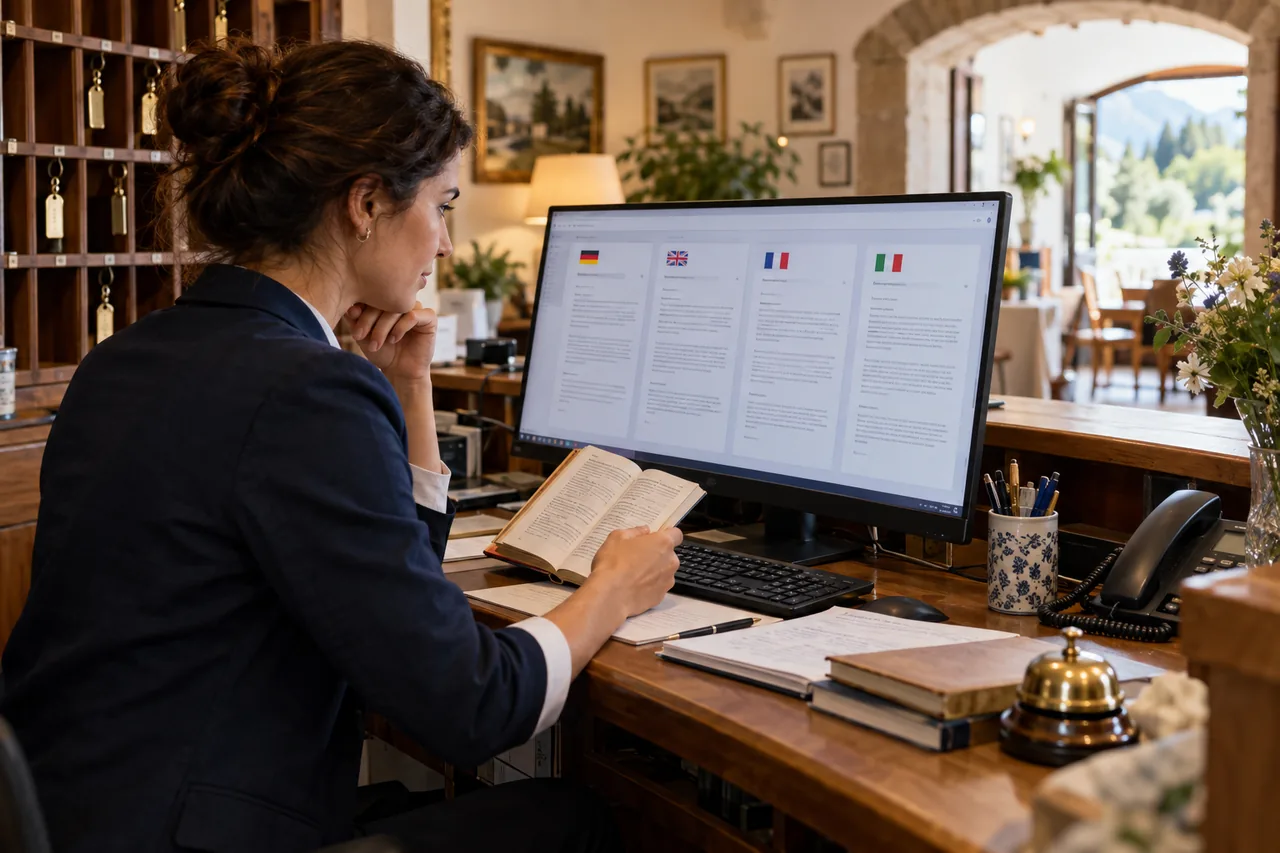
An email arrives in German, then a WhatsApp message in Dutch, a review in Polish, a quote request in French. Reception speaks good English, but other languages are a problem. The result: English replies to everyone, long delays or rough translations.
AI has changed things: today it can help you reply in many languages to a good standard. Let's look at how to use it for multilingual guest replies, quickly but without slip-ups.
Why reply in the guest's language
- guests understand prices, conditions and practical information better;
- they feel welcome before they even arrive;
- quotes are more likely to be confirmed;
- in reviews, a reply in the guest's language is appreciated by readers of that language.
See how to attract international guests to a family-run hotel.
The method
1. Make sure you understand the incoming message
Ask AI to translate and summarise the guest's message, highlighting requests, dates, number of people and special needs. That way you're sure you've understood.
2. Write the reply in your language (or have it drafted)
Prepare the reply in your own language with all the correct information: prices, availability, conditions. Or ask AI for a draft from your data.
3. Translate with tone instructions
Example:
Translate this reply into German, with a friendly but professional tone, suitable for a family booking a holiday hotel. Keep prices, dates and conditions exactly the same. Use "Sie". Don't add information.
4. Check the critical points
Even if you don't know the language, you can check:
- numbers, dates, prices: identical to the original;
- room and service names;
- links and contacts;
- similar length and structure to the original.
A useful trick: ask AI to translate the foreign version back into your language and compare it with your text.
5. Use pre-checked templates
For frequent replies (parking, times, conditions, pre-arrival information), prepare templates in each language, reviewed once by a native speaker. Then personalise only names and details.
Formal or informal?
Habits vary between languages: German often uses the formal "Sie" in business contexts, English is naturally more neutral, Spanish and Italian depend on your style. Set a rule for each language and tell the AI.
What to avoid
- sending translations without checking numbers and conditions;
- entering unnecessary personal data into AI;
- using machine translation for legal texts (contract terms, privacy) without professional review;
- overly literal expressions or idioms translated word for word.
Reviews in other languages
AI is also useful for understanding and replying to foreign-language reviews. The same rule applies: AI draft, personalisation and human check. See negative hotel reviews: how to reply without making things worse.
Frequently asked questions
Are AI translations reliable?
For the most widespread languages they're generally good quality, but may contain errors in tone, technical terms or numbers. Checking the key data is essential.
Can I use AI on the phone too?
There are real-time voice translation tools that can help in simple situations. For important conversations, written communication is better — easier to check.
Should I translate my website with AI too?
You can use it as a base, but with review and adaptation for each market. See multilingual hotel websites: which languages to choose and which pages to translate.
Want to communicate better with international guests?
With our free marketing audit we analyse how you handle multilingual communication and propose templates and AI tools suited to your hotel.