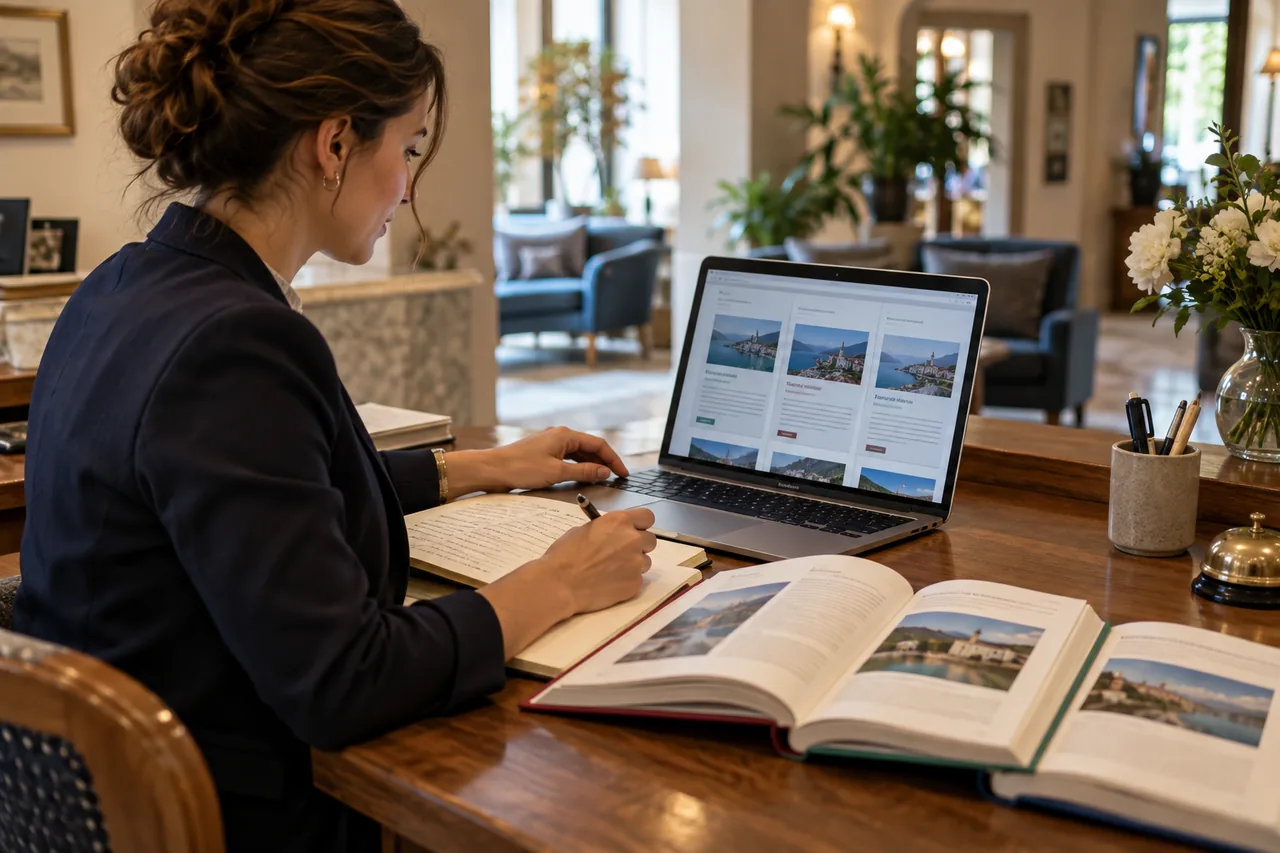
A German guest is looking for a lakeside hotel. They find your website, click the German flag and read a badly translated text, with incomprehensible sentences and half the pages still in Italian. They close it and book on Booking.com, where everything is in their language.
A multilingual hotel website isn't optional: it's a way to welcome international guests before they even arrive. But more languages don't automatically mean more bookings. Let's look at how to pick the right languages and what to really translate.
How to choose languages: start from data
Don't choose on gut feeling. Look at:
- where your guests come from over the last 2–3 years (from your PMS or OTAs);
- website visits by country in Google Analytics;
- growing markets in your destination (data from the tourist board or region);
- markets you want to win, for example for low season.
For most hotels the base is the local language and English. Then, depending on the destination: German (very strong in mountains, lakes and parts of the Mediterranean coast), French, Spanish, Dutch, Polish. Three well-crafted languages beat seven done badly.
Which pages to translate
Not the whole website needs the same level of translation. A priority scale:
| Priority | Pages | Why |
|---|---|---|
| High | Homepage, rooms, prices/offers, amenities, location, contact | Needed to decide and book |
| High | Booking engine and confirmation emails | Without them, guests won't trust paying |
| Medium | FAQs, terms, practical info | Reduce doubts and enquiries |
| Medium | Pages on the area and events relevant to that market | Bring visits from Google |
| Low | Blog, local news | Only if relevant to that market |
Machine translation: yes or no?
Machine translation tools (and AI) have improved a lot and can be a great starting point. But:
- always proofread with a native speaker or someone fluent;
- adapt, don't translate word for word: a German guest may care about different information than an Italian one (parking, pets, meal times, exact distances);
- avoid plugins that translate "on the fly" without indexable pages: Google can't see them and they don't bring visits.
Multilingual SEO: the technical basics
To be found by people searching in another language you need a few things:
- a separate URL per language, e.g. /en/ and /de/;
- hreflang tags telling Google which language versions correspond;
- translated copy, titles and meta descriptions, written with the words people in that country actually use;
- a visible, clear language selector (language names are better than flags alone).
Deep dive: multilingual SEO for hotels: how to get found by international guests.
Words change from country to country
An example: an Italian searches "hotel per famiglie", an English speaker might search "family-friendly hotel", a German "Familienhotel". Translating isn't enough: you need to understand what each market searches for. See how to find out which words people search before visiting your hotel website.
Consistency across every channel
If your website is in German, check that your Booking.com descriptions, Google profile and automated emails are in German too. A guest who booked in their language and receives the confirmation in Italian feels less welcome.
Frequently asked questions
How many languages should a hotel website have?
It depends on your markets. For many independent hotels, 2–4 well-crafted languages are enough. What matters is that each language is complete on the key pages.
Can I use AI to translate my website?
Yes, as a base. Then you need a human review to fix errors, tone and local terms. And translated pages must be real, indexable pages.
Do I need to translate the blog too?
Only the articles useful for that market — for example a guide to events or the area for international guests.
Want a website that speaks your guests' language?
With our free marketing audit we analyse your hotel's markets and the quality of your website's language versions, and tell you which languages to add or improve. The websites we build are multilingual and ready for international SEO.


