Every summer dozens of guests arrive through Booking.com. Many have a great time, leave 9/10 reviews and say goodbye promising to come back. And the next year they really do come back… booking on Booking.com again, commission included.
It's not ingratitude: it's simply the route they know. Your job is to show them a better one. In this article we look at how to build loyalty among OTA guests and turn them into regulars who book direct — while playing by the rules.
First, the rules of the game
Two things to keep in mind:
- Portal contracts restrict using guest data received through the platform (such as Booking.com's "alias" email) for marketing. Don't use it to send newsletters or promotions.
- GDPR (in the EU) requires explicit, informed consent to send marketing messages.
The solution is simple: you collect the marketing contact directly from the guest during their stay, with their consent. From then on, it's a relationship between you and them.
Phase 1: before arrival
Even if the guest booked through a portal, you can start building the relationship with service messages (which are allowed):
- a welcome message with useful information (parking, times, directions);
- the chance to share preferences or special occasions;
- a direct contact (phone or WhatsApp) for anything they need.
Tone matters: it should sound like a person, not an automated system.
Phase 2: during the stay
This is the most important moment, because the guest is there, experiencing your hotel.
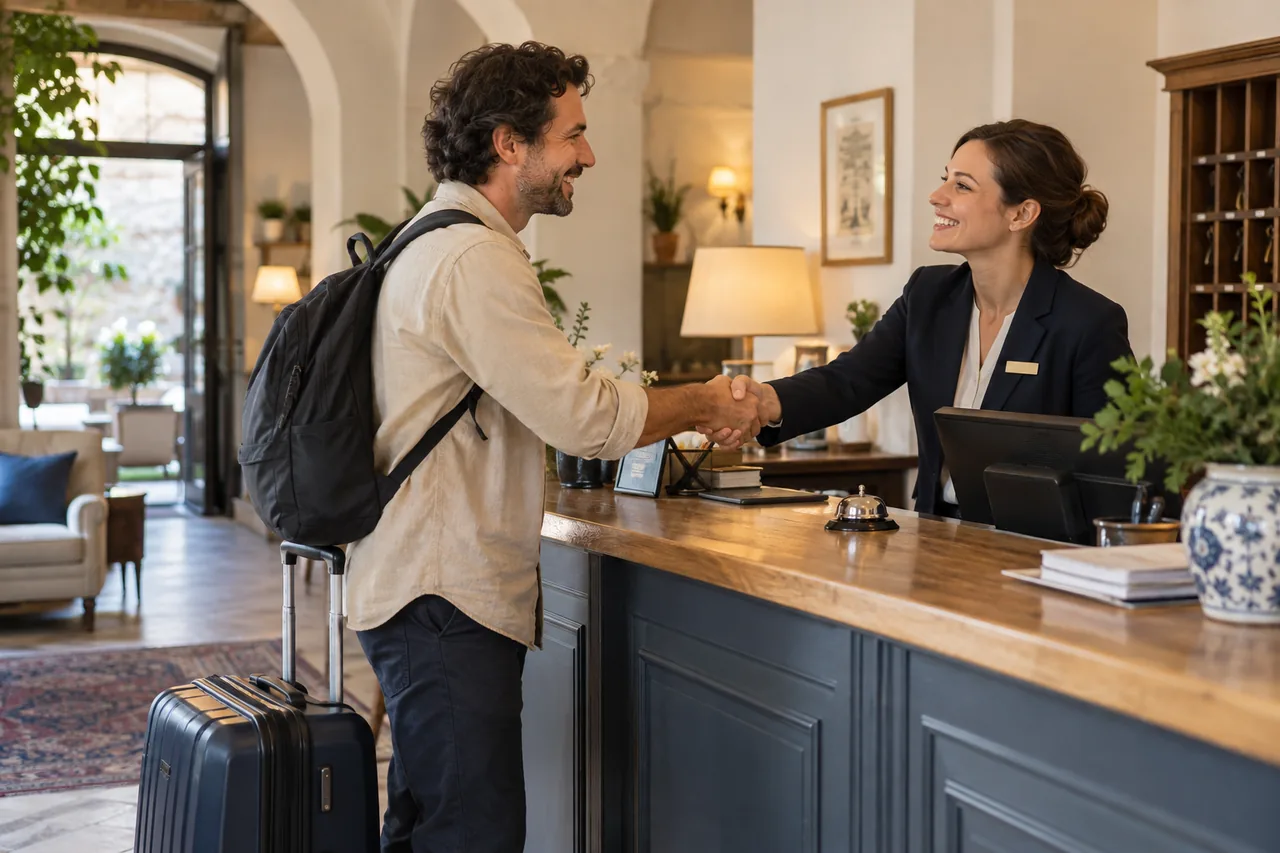
- Collect consent at check-in: a simple form (paper or tablet) where guests can leave their email and choose whether to receive offers. Explain the benefit: "We'll send you a reserved rate for next year."
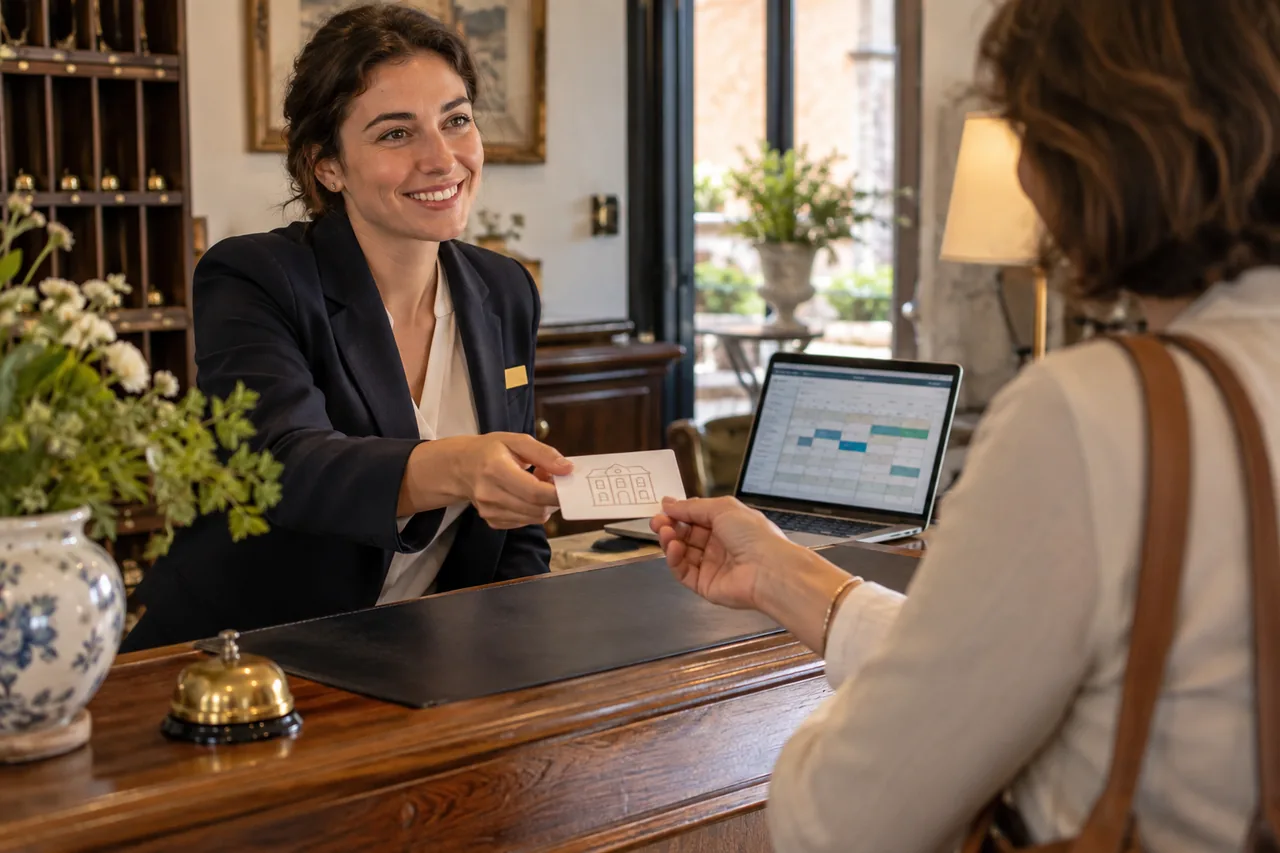
- Let them know direct pays off: a card in the room or at reception: "Next time book on our website: parking included and 12 noon check-out."
- Create a memorable moment: a small personal gesture is worth more than any campaign.
At our hotels in Rimini we use an iPad check-in with signature and privacy consent: with consent, the data feeds our marketing database and a monthly newsletter. Easy for guests, valuable for the hotel.
Phase 3: after departure
- Within 2–3 days: a thank-you email (if you have consent) inviting them to leave a review.
- After a few weeks: a message with a reserved perk for their next stay, valid only for direct bookings.
- Before the period they stayed in: that's the right time to get back in touch. If they came in July, write to them between January and March.
What to offer to bring them back direct
You don't need an aggressive discount. These work better:
- the same room as last year, if they liked it;
- a reserved rate for returning guests;
- a concrete perk (parking, upgrade, dinner);
- priority on the most in-demand dates.
Remember: even with a small perk, a direct booking costs you far less than an OTA one. See how much an OTA booking really costs you.
Measure the results
Every year ask yourself:
- how many returning guests did we have?
- how many booked direct and how many through a portal?
- how many consented emails did we collect per 100 check-ins?
Even moving from 20% to 50% of returning guests booking direct can be worth thousands of euros in saved commissions.
Frequently asked questions
Can I use the email I received from Booking.com to send offers?
No. The email provided by the portal is for booking-related communication. For marketing, you need to collect the guest's contact and consent directly.
What should I write in a newsletter to past guests?
A few useful messages: hotel news, local events, reserved perks and when bookings open. Deep dive: hotel newsletters: what to write and when to send them.
What if the guest still prefers booking on Booking.com?
That's their choice, and it's legitimate. What matters is that they know the alternative. Many choose direct once they understand they get a perk and a more personal relationship.
Want to build a system that brings guests back?
With our free marketing audit we review how you collect contacts, how you communicate with past guests and how many direct bookings you can win back. We can also build custom tools, such as a digital check-in with privacy consent.