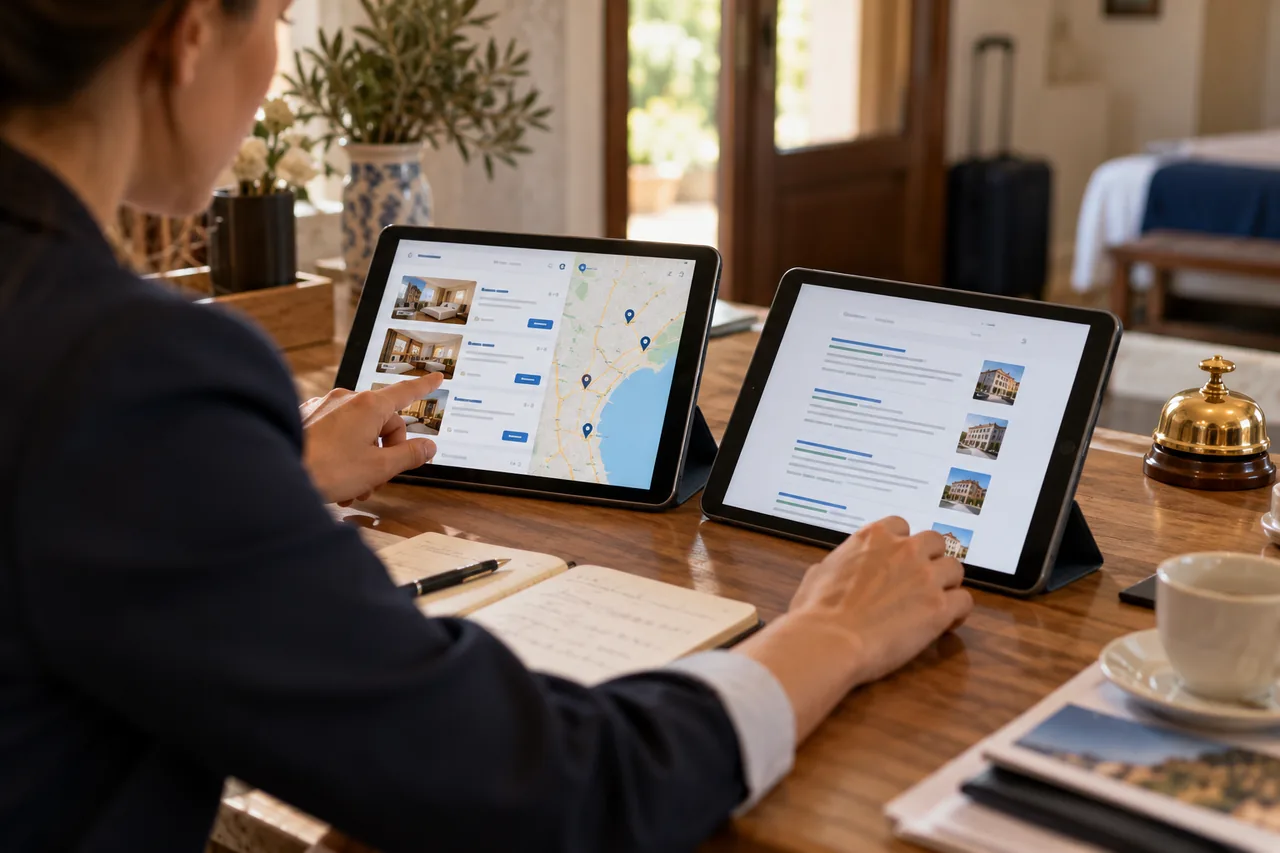
When a hotelier decides to invest in Google, they face two paths that look similar but work very differently: search ads (classic text ads) and Google Hotel Ads (ads with prices in the hotel panel). There's also a third route: Performance Max campaigns for travel goals.
In this article we look at what they are, where they appear, how they're paid for and which makes most sense for an independent hotel.
Search ads
These are the text ads that appear in Google results, above or below organic results, marked "Sponsored".
- How they work: you choose keywords (e.g. "family hotel Rimini"), write ads, set a budget and a bid.
- Where they appear: in search results when someone searches those words.
- How you pay: per click.
- Strengths: control over the message; well suited to specific searches (events, audiences, amenities), brand campaigns and offers.
- Limits: they don't show real-time prices; on generic searches they compete with OTAs with huge budgets.
Google Hotel Ads
These are the ads that appear in the hotel panel and Google's hotel search results (Maps too), with your price next to the OTAs'.
- How they work: your booking engine (or a partner) sends Google rates and availability via Hotel Center; you set up hotel campaigns in Google Ads.
- Where they appear: in the price module of the hotel panel, in hotel results, on Maps.
- How you pay: according to the strategies available in hotel campaigns. In 2024 Google retired the old commission-based strategies (per stay and per conversion), favouring strategies such as target ROAS or CPC.
- Strengths: they reach people who've already chosen your hotel and are comparing where to book; they show your direct price next to the OTAs.
- Limits: they need a technical connection; if your price isn't competitive, they return little.
Remember that alongside paid ads there are also free booking links, ranked separately. See free booking links on Google: how they work for hotels.
Performance Max for travel goals
These campaigns use Google's automation to show ads across several channels (Search, Maps, YouTube, Display, Gmail) based on your hotel's data. They can work, but need reliable tracking, enough budget and careful oversight: with little data, the algorithm may spend where it isn't needed.
Comparison table
| Search ads | Google Hotel Ads | Performance Max (travel) | |
|---|---|---|---|
| Where | Search results | Hotel panel, hotel results, Maps | Several Google channels |
| Shows price | No | Yes, in real time | Partly |
| Technical connection | No | Yes (Hotel Center) | Yes, recommended |
| Best for | Brand, specific searches, offers | People choosing where to book | Hotels with enough data and budget |
| Control | High | Medium | Lower |
Which should an independent hotel choose?
A sensible sequence for many hotels:
- Free booking links switched on: the foundation, with no cost per click.
- A brand search campaign: protects people searching your name. See should you advertise on your own hotel name?.
- Google Hotel Ads on your most important dates and markets, if your direct price is competitive.
- Targeted search campaigns for events, audiences and periods to fill.
- Performance Max, possibly, once you have solid conversion data.
Frequently asked questions
Can I run Google Hotel Ads without a booking engine?
No — you need a system that sends Google your rates and availability. Usually that's your booking engine or a metasearch partner.
Do Google Hotel Ads cost more than search ads?
It depends on competition, dates and bidding strategy. What counts is cost per booking, compared with OTA costs. See how to tell if your hotel ads cost more than OTA commissions.
Can I appear with both a free link and an ad?
Yes, Google ranks them separately, so you can appear in both positions.
Not sure which campaigns to run?
With our free marketing audit we assess your hotel's connections, pricing and demand and tell you which Google campaigns make most sense for you, in what order and with what budget.
Sources: Google Ads Help – Hotel campaigns; Google announcement on retiring commission bidding strategies (2024).