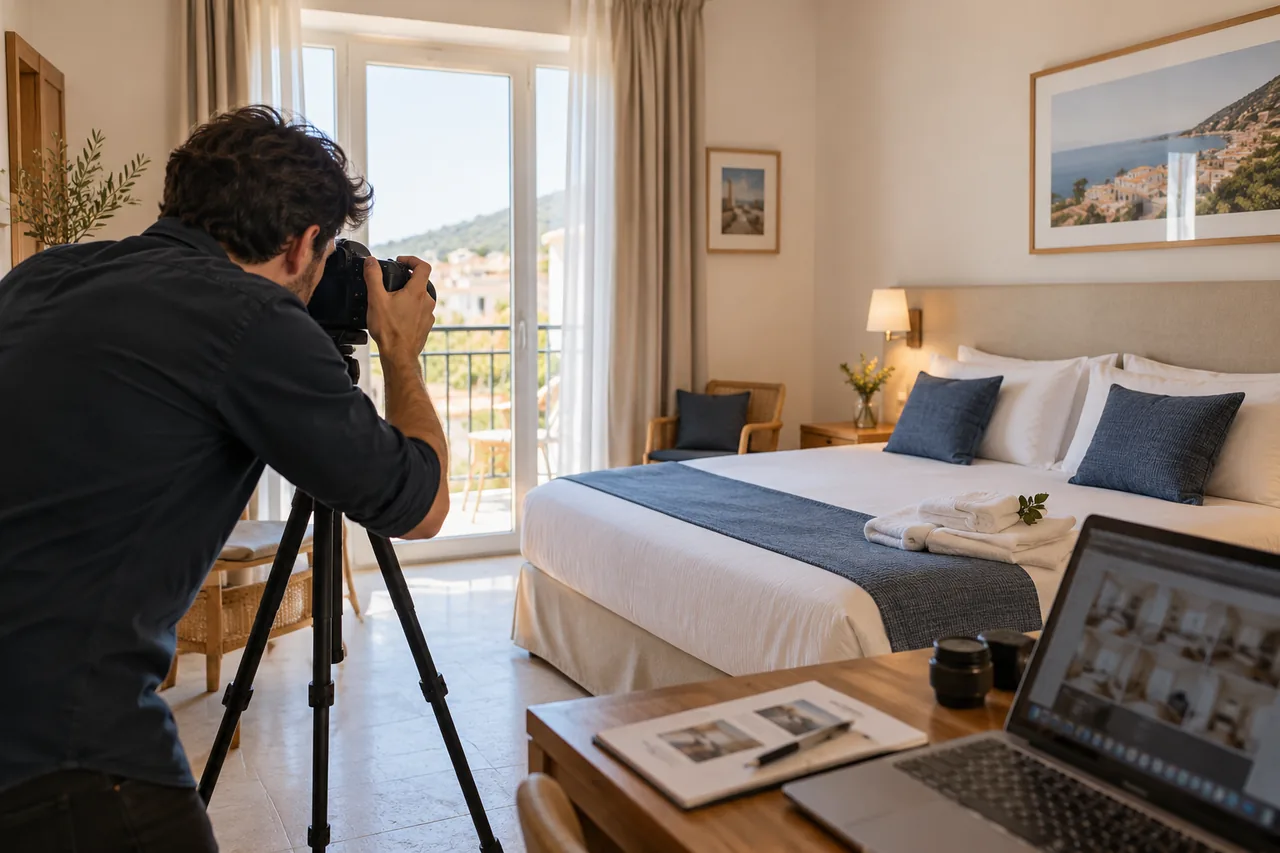
Before reading a single line, guests look at the photos. On your website, on Booking.com, on Google. In a few seconds they decide whether your hotel "is for them" or move on to the next. For a three-star hotel, where the choice often hinges on details and trust, hotel website photos are one of the highest-return investments you can make.
Let's look at which shots you really need, how to prepare them and which mistakes to avoid.
The essential shot list
Exterior and context
- the hotel façade by day (and at dusk, if it's striking);
- the entrance, so guests recognise it when they arrive;
- the view or setting: the sea, the square, the mountains, the street;
- parking, if it's a selling point.
Common areas
- reception and lobby;
- breakfast room set up, with the real buffet;
- bar, terrace, garden, pool, kids' area (if you have them).
Rooms (for each type)
- an overview from the widest angle;
- the bed, well made and well lit;
- the bathroom;
- the view from the window or balcony;
- a detail that makes the difference (desk, reading nook, sofa bed opened for family rooms).
Experiences and people
- breakfast up close: cakes, local produce, coffee;
- the staff and the family running the hotel (with their consent);
- guests enjoying the hotel (with release forms): kids in the pool, couples on the terrace;
- the area: beach, old town, trails, events.
How to prepare the photo shoot
- Pick the right time: natural light, garden in bloom, pool open.
- Prepare rooms as if for a VIP guest: tight beds, no visible cables, curtains open, lights on.
- Remove clutter: signs, bins, personal items.
- Prepare a shot list with the photographer, ranked by priority.
- Think about formats: landscape for the website, portrait for mobile and social.
Mistakes to avoid
- Over-edited photos or extreme wide angles: the room looks huge, the guest arrives disappointed. The result? Negative reviews about the "room smaller than in the photos".
- Old photos: if you've renovated the bathrooms and the photos show the old ones, you lose a selling point.
- Dark or blurry phone photos: they signal neglect.
- Only photos of empty rooms: missing emotion, people and context.
- Different photos on your website and OTAs: confusing. Use the same updated set everywhere.
Video: does a three-star hotel need it?
A short video (30–60 seconds) showing arrival, room, breakfast and surroundings helps a lot, especially on social media and your Google profile. You don't need a film production: you need authenticity and good light.
How much to invest
A professional photo shoot for a small hotel can cost from a few hundred to a few thousand euros, depending on number of shots, days of work and post-production. Remember the same photos will work for years on your website, OTAs, Google and social media. It's among the longest-lasting marketing expenses.
Optimising photos for the website
- Small file size: compress images (modern formats like WebP) so they don't slow down mobile.
- Descriptive file names: "family-room-balcony-hotel-rimini.jpg" instead of "IMG_4523.jpg".
- Alt text: a short description for each photo, useful for accessibility and SEO.
- Order: the first photo in each gallery must be the strongest.
Frequently asked questions
How often should I redo hotel photos?
Whenever you renovate something visible, and in any case every 3–4 years, to keep the style current.
Can I use photos taken by guests?
Yes, with their explicit permission. They're very authentic and work well on social media. On your website, always pair them with professional photos.
Should I show the less attractive rooms too?
Yes. Showing them honestly avoids disappointment. You can present them as a value option with the right information. See how to present a hotel with dated rooms without creating false expectations.
Want to know whether your photos are selling?
With our free marketing audit we assess your hotel's photos and visual content on your website, OTAs and Google and tell you what to reshoot first.


