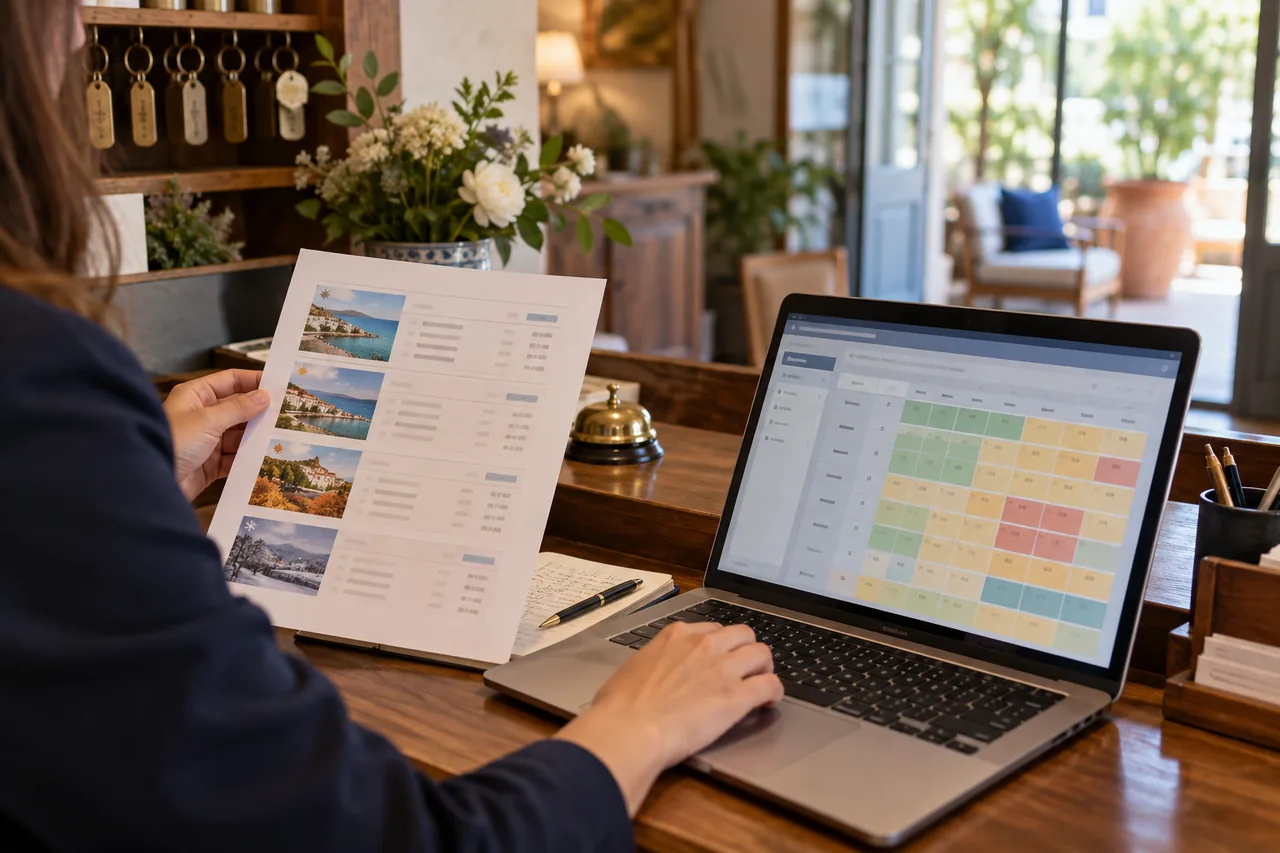
For decades hotels worked with a rate sheet: low, mid and high season, maybe a special price for mid-August. Printed, sent to agencies, valid all year. Simple, clear, predictable.
Today many people talk about dynamic pricing: rates that change with demand, date and booking pace. Is it really better? And do you need expensive software? Let's look at the pros and cons for a small hotel.
The fixed rate sheet
Pros: - simple to manage and communicate; - predictable for regular guests, agencies and companies; - no special tools required.
Cons: - doesn't follow real demand: the same price for an empty Tuesday and a Saturday with a concert in town; - in strong periods you leave money on the table (the hotel fills too early); - in weak periods the price may be too high and the hotel stays empty; - hard to react to events and changes.
Dynamic pricing
Pros: - higher prices when demand is high, more accessible when it's low; - better overall revenue (RevPAR) for the same rooms; - quick reaction to events, long weekends, market shifts; - the ability to protect the last available rooms.
Cons: - requires time, data and discipline; - done badly, it can confuse guests or lead to impulsive price cuts; - needs channel connections (channel manager) to update everything consistently.
The middle way (often best for a small hotel)
You don't have to choose between a rigid rate sheet and an algorithm changing prices every hour. A practical approach:
- keep a base grid by period (e.g. 5–7 price levels, from "very low" to "event");
- assign each date to a level based on expected demand (history, events, day of the week);
- review weekly the dates for the coming months and move levels according to booking pace;
- set simple rules: for example, above 70% occupancy more than 30 days out, go up one level;
- define a minimum price you won't go below.
It's "dynamic" enough to follow demand, but still manageable yourself. See when to raise room rates and when to wait.
What about revenue management software?
There are tools that suggest or automatically update prices based on demand, competitors and history. They can be useful, especially with more rooms and channels. Before choosing one:
- check it integrates with your channel manager and PMS;
- understand how it decides prices (and whether you can set limits);
- compare its cost with the extra revenue it can generate;
- always keep control of the main rules.
And regular guests, agencies, companies?
With dynamic pricing you can still offer:
- contracted rates, fixed or as a discount on the day's price, for companies and agencies;
- reserved prices for regular guests who book early;
- transparency: "Our prices vary with availability: book early and save."
Frequently asked questions
Does dynamic pricing annoy guests?
Guests are used to variable prices (flights, trains, OTAs). What annoys them are incomprehensible swings and price cuts after they've booked. Gradual and consistent is the key.
How much time does dynamic pricing take?
With a grid of levels and a weekly review, often an hour or two a week for a small hotel.
Can I use dynamic pricing on some channels only?
It's better to stay consistent across channels, with any perks for direct. A channel manager helps update everything at once.
Want to move to dynamic pricing without complicating your life?
With our free marketing audit we analyse your rate sheet and booking data and propose a price grid and simple rules to apply. It's the same approach we use at our own hotels.